
Direct answer: rubber gasket compression set is the permanent loss of thickness after the material has been compressed for a defined time and then released. When a gasket cannot recover enough to follow joint movement, sealing pressure can fall and leakage risk can rise.
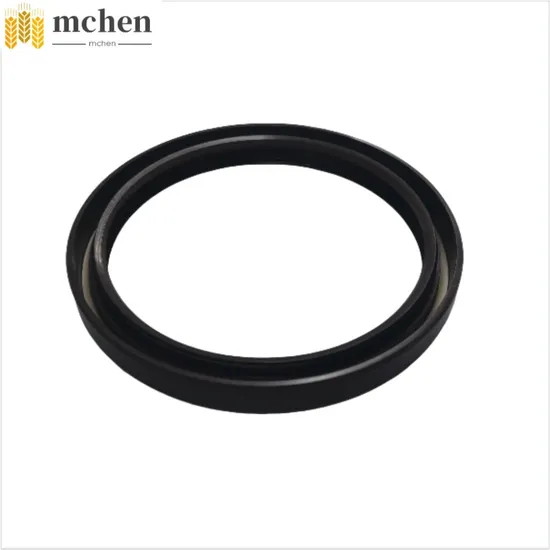
What compression set actually measures
Compression set is not simply how soft a gasket feels. It describes lasting deformation after controlled compression, temperature and recovery conditions. A test result only has meaning when the test method, time, temperature, compression percentage and specimen geometry are known.
Parker's O-Ring Handbook notes that compression set depends on the elastomer base, compound formulation, manufacturing conditions, test temperature and time, deformation, specimen thickness and test medium. That is why two parts described only as "70 Shore A rubber" may recover differently in service.
Common reasons a rubber gasket loses recovery
| Cause | What happens in the joint | What the buyer should verify |
|---|---|---|
| Material mismatch | Oil, ozone, steam, fuel or chemicals change the compound and reduce sealing performance. | Fluid, concentration, temperature and exposure time |
| Excess compression | The gasket is squeezed beyond the practical design range or has no controlled stop. | Gland depth, flange gap, bolt load and installed thickness |
| Heat and time | Long exposure at elevated temperature accelerates permanent deformation. | Continuous and peak temperature, duty cycle and shutdown pattern |
| Uneven joint loading | Warped flanges, poor alignment or irregular bolt load produce local over-compression. | Flatness, surface condition, bolt pattern and assembly sequence |
| Compound or cure variation | Batch inconsistency can change recovery, hardness and physical properties. | Material specification, sample approval and agreed inspection plan |
Field signs that point to compression loss
Permanent flattening is only one possible cause of a leak, so inspect the complete joint. Useful evidence includes a gasket that remains visibly thin after removal, local hardening, cracking, extrusion, polished leak tracks, loose fasteners or a flange that no longer loads the gasket evenly.
- Leakage appears after heat cycles or long static service.
- Retightening temporarily reduces leakage but does not solve it.
- The removed gasket does not return close to its original profile.
- One area is crushed more than the rest of the sealing face.
- A replacement fails in the same location, suggesting a joint issue.
How to specify a gasket for better recovery
Start with the service conditions, then define the material and geometry. A lower laboratory compression set value can be useful, but it cannot correct the wrong fluid compatibility, an unstable flange or uncontrolled compression.
Material, geometry and cost must be balanced
EPDM, NBR, silicone, FKM and other compounds each have different compatibility, recovery and cost profiles. Cross-section, thickness and part shape also affect how the gasket responds. For OEM sourcing, the most useful quote compares materials against the actual application instead of treating the most expensive compound as automatically better.
Compression set FAQ
Is lower compression set always better?
A lower tested value generally indicates better recovery under those test conditions. Final selection must still account for media, heat, pressure, geometry, wear and cost.
Can a flattened gasket be reused?
Do not assume it can. If the gasket is visibly flattened, hardened, cracked or distorted, replacement and joint inspection are the safer sourcing decision.
Can MCHEN review an existing failed gasket?
Yes. Send the old part, dimensions, joint photos, service conditions and quantity. The review can identify the missing RFQ information and practical material or geometry options.
Technical reference: Parker O-Ring Handbook, compression set section. Test values must be interpreted under their stated conditions.